
My workbench for electronics hacking is a 54″ wide standing desk. I built a shelf for it out of 8020 T-slot extruded aluminum and a 1/2″ thick slab of HDPE (“starboard”) to hold my oscilloscope, power supply, and various other instruments.
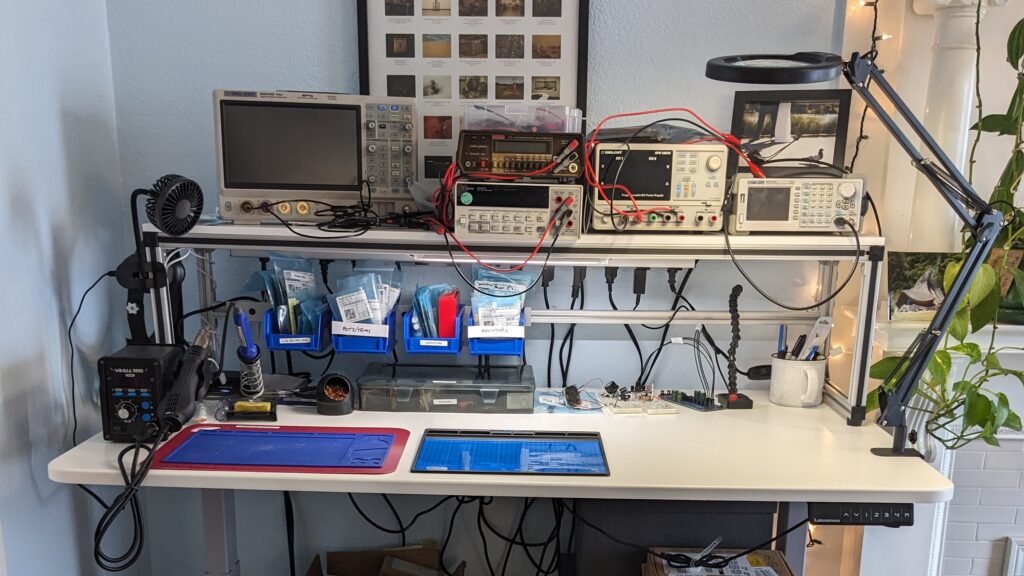
8020 is a very neat system for building all manner of things you could imagine. This shelf is 12″ deep and sits 12″ above the table top surface. I opted for a fully-supported design, with legs in back and front, rather than a cantilever. This is probably over-built, but some of that gear is pretty expensive and if it snapped, I’d be very sad. (This actually uses the smallest 1″x1″ tubing they offer — “1010” — but it feels incredibly sturdy.)
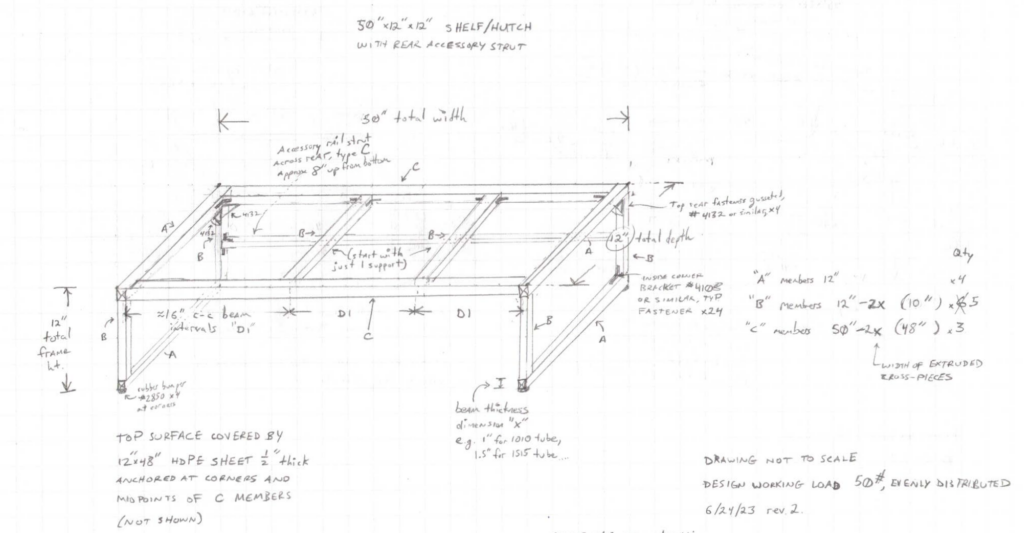
The design of the frame includes a cross-member in the middle of the span to help support the actual shelf material, rather than relying entirely on the outside edges. The shelf is fastened to the frame via a few machine screws and tee nuts. HDPE can be drilled through very easily so it’s easy to work with.
There’s also an accessory rail on the back where I’ve mounted a few organizer boxes. The power strip similarly had mounting brackets that could each be screwed into a tee nut, and I was also able to mount an LED strip under the front in the same fashion. A nice thing about 8020 is they have a bunch of other accessories, too. For example, I was also able to find some hooks to hang on the sides. (You can rack up a big bill tricking something like this out with accessories if you let yourself go…)
If you’re interested in building something similar, here’s a link to the BOM. I’ve listed out all the official 8020 parts, but some of them weren’t ordered directly; I saved money by buying some of the connectors on Amazon. If this were for something where the load is safety-critical, I would not do this; they definitely feel a bit sketchy. But in a case like this where the loads are not so high, it works fine. I also saved some money by buying the HDPE surface material from TAP Plastics.
One place I did not save money was in buying that thin black strip to cover the T-slots on the front. It gives it a clean look, and the material didn’t cost much at all, but that wound up being shipped separately in a very large cardboard tube, and added a surprisingly big chunk to the total shipping cost. If I were doing this over, I would definitely have skipped that part!
Overall it’s been a very helpful addition to making the workbench more functional, and I’ve been super happy with the result!